Humans of NHC: Dr. Laura Hribar
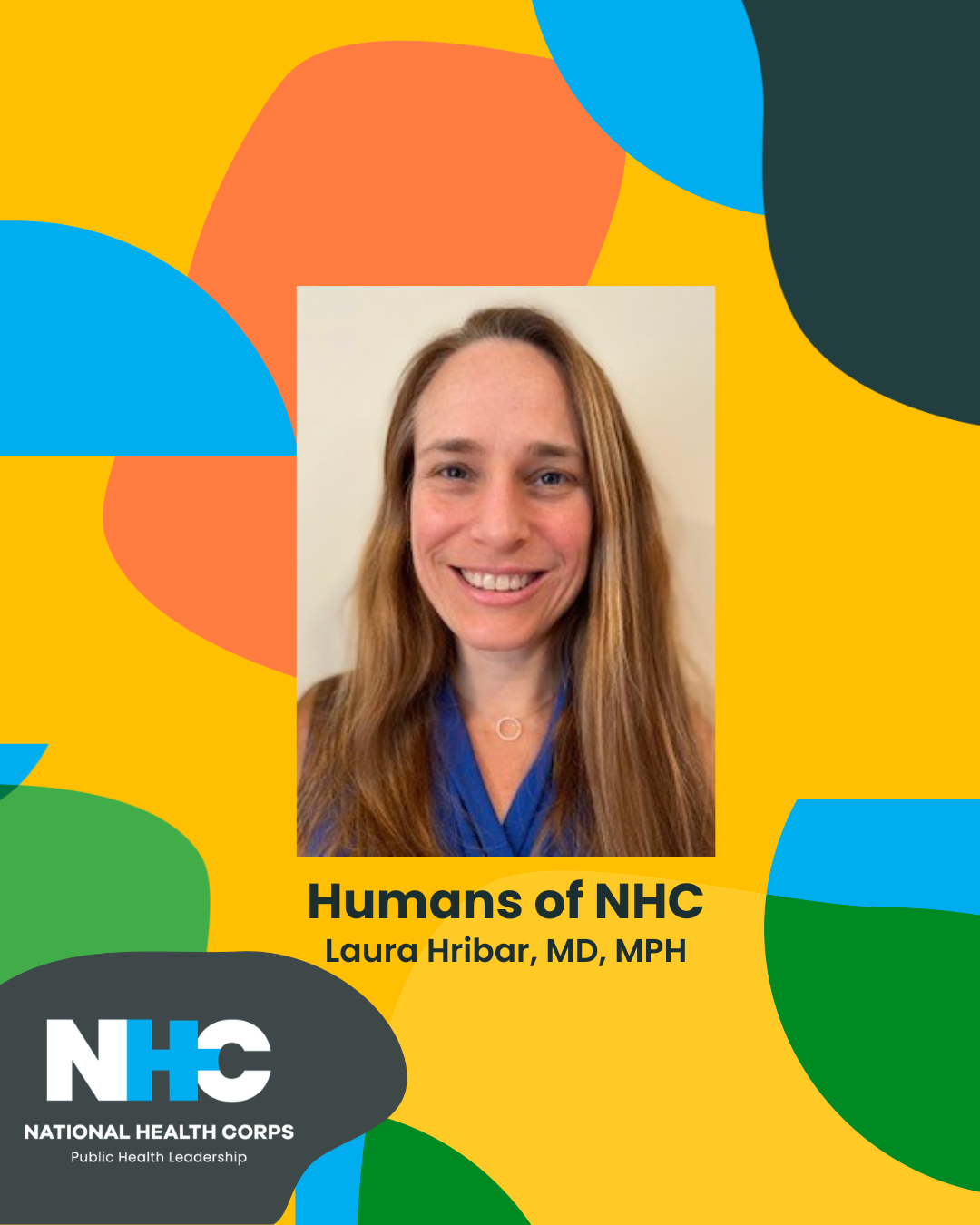
Dr. Laura Hribar is the long-time Clinical Director of Health Center #6, one of Philadelphia’s eight city-run safety net health centers. She supervises current NHC Philly member Claire St. Peter in her role as a Patient Advocate at the health center. Claire sat down with Dr. Hribar todiscuss her early experiences that led her to a career in medicine, what aspects of her job have kept her there for nearly 20 years, and what she wishes more people knew about community health centers.
1. Your relationship to AmeriCorps began well before you became an NHC host site supervisor. Tell me more about that.
Right after college I did a two year Teach For America service term in Washington DC. My first year I taught ninth grade biology and during my second year I taught anatomy and physiology and I started an AP Biology course at the high school. I also got to work with another AmeriCorps member who was assigned to our school as a Hunger Advocate. She helped us renovate a greenhouse that was vandalized and start a community garden and accompanying greenhouse gardening class students could take before first period. We would sell produce grown in the garden outside of the capitol building. We also got a grant with an organization called Food & Friends that provides medically-tailored meals to patients with cancer, HIV, and otherserious illnesses. We would provide some of the produce we grew in the school’s garden to Food & Friends, and our students had the chance to learn more about nutrition and the role that specialized diets play in maintaining good health.
2. I can see the parallels between your Teach for America work and a career in public health and medicine. When did you first start thinking about being a doctor and how did you make the transition from Teach for America to medical school?
In high school I wanted to go into medicine and be an orthopedic surgeon. In college, I thought I could serve people and do a lot of good without going to medical school. The relationships I built with my students and their families during my Teach for America service term made me think about how physical health is really tied to all of the social determinants of health. From that point onwards I felt called to go into a career in public health and primary care. I thought about opening a school-based health center, or a medical clinic based in the community, and it was through that interest that I learned a lot about Federally Qualified Health Centers.
3. How did you end up at Health Center #6 here in Philadelphia?
I did my residency in Philadelphia at Thomas Jefferson University. Two of the former family medicine residents worked at Health Center #6. I thought that I wanted to work within the established system to help improve it, and so I asked to shadow these two doctors. I set up my own community medicine rotation and I spent a couple of days shadowing each of them and I was also doing some concurrent community health research. After that experience I applied for a job and got it. I will have been here 20 years this July.
4. Nearly 20 years in, what keeps you coming back to Health Center #6?
The work that we get to do with patients and the gratitude they show keeps me coming back. It’s rewarding to see how great of an impact we can make on an individual level. Also when we make operational and workflow improvements here at Health Center #6 they can be implemented across the other city-run health centers for the benefit of patients across the city. We are the city’s safety net so we have that responsibility and that privilege to be with patients in their most troubling times.
5. What are some of the biggest challenges of working at a safety net health center?
One of the hardest things to deal with are the policy changes that are outside of our control. These policies impact the services that we are able to provide to patients and having to keep track of policies and flipping back and forth between being able to pr vide something and then not being able to provide it and explaining that to patients and staff is difficult. You train staff for one thing and oftentimes you will have to make some changes in response to policies we don’t have control over because we are in large part government funded.
6. What is something that you wish more people knew about Health Center #6 and community health centers more generally?
That patients tend to come here and stay here for a long time. I think a lot of people believe that patients just come here when they don’t have insurance or something, but many patients have stayed for their entire adulthoods and some even for their entire lives. We have patients who start here as pediatric patients and end up bringing their own children to Health Center #6. Patients who start out uninsured and then get insurance often stay with us. That’s especially helpful because if they lose coverage again in the future it’s a seamless transition and they can remain here and still get care without any gaps in access.
About the Author